I adore working with 1st time Home Buyers. I always have!
Their enthusiasm for the process is contagious and they are typically my best clients as far as follow-through, diligent contract compliance, and following my advice. There is something special about walking a client through the process for their very 1st time. It never ceases to amaze me how PRO they are by close day. Extremely graitifying work!
US News and World Report released an interesting article called Decoding the First-Time Homebuyer with some of the 2013 obstacles facing this group and interesting statistics including that 1st time Buyers represent a WHOPPING 40% of today's buyer pool.
Here are some other interesting stats...
Full article can be found here: http://www.usnews.com/news/blogs/home-front/2013/04/26/decoding-the-first-time-homebuyer
Showing posts with label Articles. Show all posts
Thursday, May 2, 2013
Tuesday, February 26, 2013
Own a Home? Check Out These 8 Tax Breaks
Ahh, tis the season! We can all use a little help, no? Hence when I stumble upon a useful article, particularly during this time of year, I try to share it. One of the most substantial benefits of owning your own home is evident at tax time in the form of deduction!
This article that I stumbled upon on YAHOO! Homes is a fantastic guideline to ensure that you are maximizing your deductions...
Own a Home? Check Out These 8 Tax Breaks
By Mary Boone | Zillow – Wed, Feb 20, 2013 1:02 PM EST
Taxes are due April 15, which means it’s time to start gathering your W2s, 1099s, child care receipts and bank statements.
But before you sit down with your accountant, it’s important for you to know that merely owning a home could mean you qualify for tax breaks. In most cases, you need to itemize your taxes in order to take advantage of these deductions. Yes, it makes the tax-filing process seem impenetrable, but the benefits may outweigh the complications.
Here are a few of the tax breaks you’ll want to investigate:
Mortgage interest paid at settlement
Take a look at your closing statement; one item that’s generally listed there is home mortgage interest. On a mortgage of up to $1 million, you can deduct the interest that you pay at settlement if you itemize your deductions on Schedule A (Form 1040). This amount should be included in the mortgage interest statement provided by your lender.Points
Did you pay points in order to obtain your home mortgage? These fees are included on the income tax deductions list and can be deducted as long as they are associated with the purchase of a home. If you refinanced your home, these points are still deductible, but it must be done over the life of the mortgage.Property taxes
As long as they are based on the assessed value of the real property, you can deduct your state and local property taxes. However, if your money is being held in escrow for the purpose of paying property taxes, you cannot claim this deduction until the money is actually taken out of escrow and paid. If you do this, check your Form 1098 for the amount you may deduct. Be aware that if you receive a partial refund of your property tax, the amount of the deduction you can claim will be reduced.Selling costs
If you sold a home in the past year, you may be able to reduce your income tax by the amount of your selling costs. These costs can include things such as repairs, title insurance, advertising expenses and broker’s fees. The IRS only allows the deduction of repair costs associated with selling if the repairs were made within 90 days of the sale. It’s also crucial that the repairs were made with the intent of improving your home’s marketability. Selling costs are deducted from your gain on the sale.Home office
If you use a portion of your home exclusively for the purpose of an office for your small business, you may be able to claim a deduction on your taxes for costs related to insurance, repairs and depreciation. You may only claim this deduction if the space within your home is used exclusively and regularly as either your principal place of business or a place where you meet and deal with customers or patients. You may also be able to take advantage of this deduction if a portion of your home routinely is used for storing items (product samples, inventory, etc.) used in your business.In tax year 2010 (the most recent year for which figures are available) nearly 3.4 million taxpayers claimed the home office deduction.
Mortgage insurance premiums
You may be able to deduct the premiums paid for private mortgage insurance for your principal residence and for a non-rental second home.The deduction begins to phase out once your adjusted gross income reaches $100,000 ($50,000 for married filing separately). In general, you can deduct the premiums paid for the current tax year only.
A qualified tax adviser can provide information about rules for mortgage insurance provided by the Federal Housing Administration, Department of Veterans Affairs and Rural Housing Service.
Home improvement loan interest
If you’ve taken out a loan to make improvements on your home, you may be able to deduct the interest on this loan. Qualifying loans are those taken out to add “capital improvements” to your home, meaning the improvement must increase your home’s value, adapt it to new uses or extend its life. New carpeting or painting are not considered capital improvements, while adding a garage, installing a water heater or building a deck are all examples of capital improvements.Construction loan interest
If you take out a construction loan to build a home, you may qualify to deduct the interest. The IRS only allows a deduction for mortgage interest if the loan relates to a “qualified” home, which means it must either be your principal residence or a vacation home that you will use for personal purposes.You can only use this deduction for the first 24 months of the loan, even if the actual construction takes longer.
Tax codes can be confusing. You may want to consult the IRS website for information concerning deductions and credits. Additionally, consider meeting with a professional to ensure you’re not missing any deductions for which you’re eligible.
Tuesday, April 26, 2011
Seller Tip: Common Mistakes
I bumped into this article on MSNBC.com and had to share. FANTASTIC advice that is extremely pertinent to the current market...
Six Common Mistakes That Home Sellers Make
With many deals closing at a loss, buyers know they are in the drivers seat

By Jill Simmons
Selling a home during this real estate downturn can be stressful on the seller. It’s not unusual for some homes to sit on the market for months on end, and many areas are still working through a backlog of foreclosure inventory, which also drives down home prices. Fact: 36 percent of homes nationwide sold for a loss in January. As we enter spring’s home shopping season, buyers are in the driver’s seat in many markets, and they know it. That’s why if you’re planning on putting your home on the market, it’s crucial to understand the time-honored mistakes sellers make, and how to avoid them.
Pricing for yesteryear
Nationally, home values have fallen 27 percent since the market peaked in 2006. In some markets, total declines are in the 50-60 percent range. Yet, many sellers are tempted to list their home for sale based on what they paid for the home, not on their area’s current market conditions. If you set a price too high, your house will sit. This will inevitably lead to price reductions, which could signal to buyers there is much more room for negotiation. In the past 30 days, 23 percent of homes listed for sale on Zillow have had their price reduced.
Tip: Arm yourself with information on comparable home sales, price reductions in your area, and find out how long homes are typically on the market. Then you can have an informed discussion with your agent about the appropriate price for your home, given local market conditions.
Focusing on comps
Don’t concentrate solely on the recent sales of homes in your area. Make sure you look at the listing price for homes that are on the market right now. These homes are your competition. Based on your competition, would a potential home buyer think they are getting a good deal on your home, or theirs?
Tip: Go see the homes for sale in your neighborhood. Ask your agent what current buyers are looking for in a home these days and ask yourself objectively how your home stacks up against the competition.
Limiting your marketing exposure
Real estate is often thought of as a local business, but when marketing your home it’s essential to think broadly. Limiting your exposure to a few local web portals makes it hard for home shoppers to find your listing.
Tip: Make sure your agent is active on the top online home shopping websites and has experience using technology to market your home (e.g., Twitter, Facebook). Even if you aren’t active online, 90 percent of buyers use the Internet to search for a home, according to National Association of Realtors. Don’t forget to use your own social networks to build online buzz.
Ignoring web appeal
When marketing your home online, display as many photos of your property as possible. Help buyers visualize themselves in your space by posting lots of interior shots. Focus on what people care about, namely, the kitchen, living spaces, and even the bathrooms. Make sure to clean up and de-clutter, it’s amazing how many messy rooms are shown in listing photos. And remember — as more and more people use mobile apps to shop for homes — 23 million homes are viewed on Zillow mobile real estate apps each month (that’s nine homes per second) — the quantity and quality of photos matter. High-resolution is best.
Don’t follow buyers around when showing
Whenever possible, don’t be home when showing. Lurking sellers make buyers nervous — they don’t feel comfortable inspecting the house when they feel like they’re being watched. It’s easier for buyers to visualize the home being theirs when they have a chance to critique and discuss the home among themselves.
Tip: Unless there’s a real reason for it, don’t ask your agent to be present for all showings. Other agents want privacy with their buyers and they don’t usually have time to work around your agent’s schedule.
Thursday, January 20, 2011
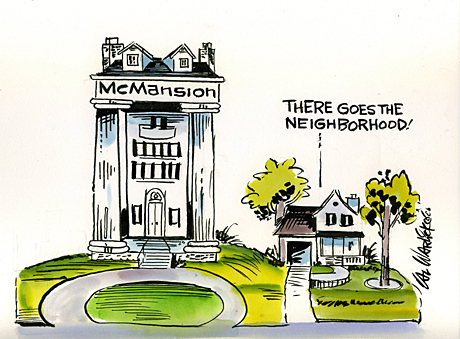
Hold the McMansion, please...

This afternoon, I found a fascinating article about Generation Y on Yahoo's real estate page. Personally, I have had a blast working with this new generation of Home Buyers thus far! In my experience, Gen Y is super aware of excess and green alternatives. They don't want to be a slave to a huge home, yard, or excessive payments. As an agent, the trend is not only fascinating, but exciting.
Long gone are the days of combing the outskirts for the largest and most impressive. Rather, it is back to the old real estate tried and true of location, location, location. Gen Y-ers tend to show a lot of focus during their home search, concentrating on the amenities and location that truly meets their needs.
Regardless, I had to share...
No McMansions for Millennials
By S. Mitra Kalita and Robbie Whelan, WSJ.com
Here's what Generation Y doesn't want: formal living rooms, soaker bathtubs, dependence on a car.In other words, they don't want their parents' homes.
Much of this week's National Association of Home Builders conference has dwelled on the housing needs of an aging baby boomer population. But their children actually represent an even larger demographic. An estimated 80 million people comprise the category known as "Gen Y," youth born roughly between 1980 and the early 2000s. The boomers, meanwhile, boast 76 million.
Gen Y housing preferences are the subject of at least two panels at this week's convention. A key finding: They want to walk everywhere. Surveys show that 13% carpool to work, while 7% walk, said Melina Duggal, a principal with Orlando-based real estate adviser RCLCO. A whopping 88% want to be in an urban setting, but since cities themselves can be so expensive, places with shopping, dining and transit such as Bethesda and Arlington in the Washington suburbs will do just fine.
"One-third are willing to pay for the ability to walk," Ms. Duggal said. "They don't want to be in a cookie-cutter type of development. ...The suburbs will need to evolve to be attractive to Gen Y."
Outdoor space is important-but please, just a place to put the grill and have some friends over. Lawn-mowing not desired. Amenities such as fitness centers, game rooms and party rooms are important ("Is the room big enough to host a baby shower?" a millennial might think). "Outdoor fire pits," suggested Tony Weremeichik of Canin Associates, an architecture firm in Orlando. "Consider designing outdoor spaces as if they were living rooms."Smaller rooms and fewer cavernous hallways to get everywhere, a bigger shower stall and skip the tub, he said. Oh, but don't forget space in front of the television for the Wii, and space to eat meals while glued to the tube, because dinner parties and families gathered around the table are so last-Gen. And maybe a little nook in the laundry room for Rover's bed?
In his presentation, KTGY Group residential designer David Senden showed slide after slide of dwellings that looked like a cross between a hotel lobby and the set of "Melrose Place."
He christened the subset of the generation delaying marriage and family as "dawdlers."
"A house in the suburbs is not for them," Mr. Senden said. "At least not yet."
Places to congregate are more important than a big apartment, he cautioned. He showed one layout of a studio apartment-350 square feet, as big as Mom and Dad's Great Room. Common space has migrated to "club rooms," he said, where Gen-Y residents can host meals and hang out before heading to a common movie-screening room or rooftop swimming pool that they share with the building's other tenants.
The Great Recession and its effects on young people's wages will affect how much home they can buy or rent for years to come.
"Not too many college grads can afford a lot of space in the city," he said. "Think lots of amenities with little tiny units-and a lot of them to keep (fees) down. ...The things these places are doing is constantly coordinating activities. The residents get to know each other and it makes for a much livelier and friendlier environment."
Monday, November 8, 2010
Reality check: 10 reasons why it's good to buy a home in this market
I read this fabulous article in the Wall Street Journal not too long ago, and have passed it along to several clients and friends. Figured that the blog is a perfect place to share it, as well.In a time where the media is primarily focused on the "doom and gloom" of the current housing market, writer Brett Arends highlights the BENEFITS of buying in this market. Many of the mentioned pros of taking the plunge, I have been highlighting for months! This article is a phenomenal overview of the current housing climate, and the endless opportunities that currently exist out there for Buyers. Brett deserves a HUGE high five for this one!!
10 Reasons To Buy a Home
Written by Brett Arends
Enough with the doom and gloom about homeownership.
Sure, maybe there's more pain to come in the housing market. But when Time magazine starts running covers that declare "Owning a home may no longer make economic sense," it's time to say: Enough is enough. This is what "capitulation" looks like. Everyone has given up.
After all, at the peak of the bubble five years ago, Time had a different take. "Home Sweet Home," declared its cover then, as it celebrated the boom and asked: "Will your house make you rich?"
But it's not enough just to be contrarian. So here are 10 reasons why it's good to buy a home.
1. You can get a good deal.
Especially if you play hardball. This is a buyer's market. Most of the other buyers have now vanished, as the tax credits on purchases have just expired. We're four to five years into the biggest housing bust in modern history. And prices have come down a long way– about 30% from their peak, according to Standard & Poor's Case-Shiller Index, which tracks home prices in 20 big cities. Yes, it's mixed. New York is only down 20%. Arizona has halved. Will prices fall further? Sure, they could. You'll never catch the bottom. It doesn't really matter so much in the long haul.
Where is fair value? Fund manager Jeremy Grantham at GMO, who predicted the bust with remarkable accuracy, said two years ago that home prices needed to fall another 17% to reach fair value in relation to household incomes. Case-Shiller since then: Down 18%.
2. Mortgages are cheap.
You can get a 30-year loan for around 4.3%. What's not to like? These are the lowest rates on record. As recently as two years ago they were about 6.3%. That drop slashes your monthly repayment by a fifth. If inflation picks up, you won't see these mortgage rates again in your lifetime. And if we get deflation, and rates fall further, you can refi.
3. You'll save on taxes.
You can deduct the mortgage interest from your income taxes. You can deduct your real estate taxes. And you'll get a tax break on capital gains–if any–when you sell. Sure, you'll need to do your math. You'll only get the income tax break if you itemize your deductions, and many people may be better off taking the standard deduction instead. The breaks are more valuable the more you earn, and the bigger your mortgage. But many people will find that these tax breaks mean owning costs them less, often a lot less, than renting.
4. It'll be yours.
You can have the kitchen and bathrooms you want. You can move the walls, build an extension–zoning permitted–or paint everything bright orange. Few landlords are so indulgent; for renters, these types of changes are often impossible. You'll feel better about your own place if you own it than if you rent. Many years ago, when I was working for a political campaign in England, I toured a working-class northern town. Mrs. Thatcher had just begun selling off public housing to the tenants. "You can tell the ones that have been bought," said my local guide. "They've painted the front door. It's the first thing people do when they buy." It was a small sign that said something big.
5. You'll get a better home.
In many parts of the country it can be really hard to find a good rental. All the best places are sold as condos. Money talks. Once again, this is a case by case issue: In Miami right now there are so many vacant luxury condos that owners will rent them out for a fraction of the cost of owning. But few places are so favored. Generally speaking, if you want the best home in the best neighborhood, you're better off buying.
6. It offers some inflation protection.
No, it's not perfect. But studies by Professor Karl "Chip" Case (of Case-Shiller), and others, suggest that over the long-term housing has tended to beat inflation by a couple of percentage points a year. That's valuable inflation insurance, especially if you're young and raising a family and thinking about the next 30 or 40 years. In the recent past, inflation-protected government bonds, or TIPS, offered an easier form of inflation insurance. But yields there have plummeted of late. That also makes homeownership look a little better by contrast.
7. It's risk capital.
No, your home isn't the stock market and you shouldn't view it as the way to get rich. But if the economy does surprise us all and start booming, sooner or later real estate prices will head up again, too. One lesson from the last few years is that stocks are incredibly hard for most normal people to own in large quantities–for practical as well as psychological reasons. Equity in a home is another way of linking part of your portfolio to the long-term growth of the economy–if it happens–and still managing to sleep at night.
8. It's forced savings.
If you can rent an apartment for $2,000 month instead of buying one for $2,400 a month, renting may make sense. But will you save that $400 for your future? A lot of people won't. Most, I dare say. Once again, you have to do your math, but the part of your mortgage payment that goes to principal repayment isn't a cost. You're just paying yourself by building equity. As a forced monthly saving, it's a good discipline.
9. There is a lot to choose from.
There is a glut of homes in most of the country. The National Association of Realtors puts the current inventory at around 4 million homes. That's below last year's peak, but well above typical levels, and enough for about a year's worth of sales. More keeping coming onto the market, too, as the banks slowly unload their inventory of unsold properties. That means great choice, as well as great prices.
10. Sooner or later, the market will clear.
Demand and supply will meet. The population is forecast to grow by more than 100 million people over the next 40 years. That means maybe 40 million new households looking for homes. Meanwhile, this housing glut will work itself out. Many of the homes will be bought. But many more will simply be destroyed–either deliberately, or by inaction. This is already happening. Even two years ago, when I toured the housing slump in western Florida, I saw bankrupt condo developments that were fast becoming derelict. And, finally, a lot of the "glut" simply won't matter: It's concentrated in a few areas, like Florida and Nevada. Unless you live there, the glut won't have any long-term impact on housing supply in your town.
Write to Brett Arends at brett.arends@wsj.com .
Monday, June 28, 2010
36 Hours in St. Louis...
Great article recently published about St. Louis in the New York Times. Had to share...
By DAN SALTZSTEIN
**Published: June 18, 2010
ST. LOUIS is more than just a Gateway to the West. The famous arch, of course, is still there, along with plenty of 19th-century architecture and an eye-opening amount of green space. But St. Louis is a lively destination in its own right, full of inviting neighborhoods, some coming out of a long decline and revitalized by public art, varied night life and restaurants that draw on the bounty of surrounding farmland and rivers. Add to that a mix of Midwestern sensibility and Southern charm, and you’ve got a city looking to the future.
Friday
4 p.m.
1) STREET LIFE
See the city’s evolution in action on Cherokee Street. Once known for their concentration of antiques shops (cherokeeantiquerow.net), the street’s brick town houses are now also home to funky cafes and stores. Highlights include Apop Records (No. 2831; 314-664-6575; apoprecords.com), which carries an impressively eclectic selection of psych pop, punk, country and jazz records. The Mud House (No. 2101; 314-776-6599; themudhousestl.com) draws a young crowd with its excellent coffee. And PhD Gallery (No. 2300; 314-664-6644; phdstl.com) features nearly 2,000 square feet of space, with works from local and regional artists, including a just-opened photo exhibition, “Beyond XY,” that explores male identity.
7 p.m.
2) SOULARD
The historic neighborhood of Soulard (pronounced SOO-lard) is one of those neighborhoods experiencing a renaissance, thanks in part to several quality restaurants. Franco (1535 South Eighth Street; 314-436-2500; eatatfranco.com), an industrial-chic bistro that opened in 2007 next to the famous Soulard farmers’ market, serves soulful takes on French bistro fare, like country-fried frogs’ legs in a red wine gravy ($9) and grilled Missouri rainbow trout in a crayfish and Cognac cream sauce ($22).
10 p.m.
3) ANALOG UNDERGROUND
Frederick’s Music Lounge, a beloved dive bar, may be gone, but its legendary owner, Fred Boettcher Jr., a k a Fred Friction, reemerged last year with a new club beneath the restaurant Iron Barley. Follow signs for “FSFU” — Fred’s Six Feet Under (5510 Virginia Avenue; 314-351-4500; www.ironbarley.com). Music venues don’t get much more intimate; the band might take up a third of the total space. Drinks are cheap, and the tunes, courtesy of local bands like the Sins of the Pioneers, and their brand of New Orleans R&B, are as unpretentious as the crowd.
Saturday
9 a.m.
4) CUPCAKES AND CANVASES
In the leafy neighborhood of Shaw, stately architecture mixes with hip spots like SweetArt (2203 South 39th Street; 314-771-4278; sweetartstl.com), a mom-and-pop bakery and art studio. Reine Bayoc (mom) makes the food, which features vegan ingredients like soy-based “facon” and “un-chicken.” Cbabi Bayoc (pop), whose colorful and playful artworks line the walls, paints in the studio in the back. Don’t leave without sampling Ms. Bayoc’s light-as-air cupcakes, which come in flavors like strawberry lemonade ($1.95 each).
10:30 a.m.
5) PERSONAL LANDSCAPE
The neighborhood is named after Henry Shaw, a botanist and philanthropist whose crowning achievement is the Missouri Botanical Garden (4344 Shaw Boulevard; 314-577-5100; mobot.org). Founded in 1859, it is billed as the oldest continuously operating botanical garden in the nation. It covers an impressive 79 acres and includes a large Japanese garden and Mr. Shaw’s original 1850 estate home, as well as his (slightly creepy) mausoleum.
1 p.m.
6) TASTE OF MEMPHIS
St. Louis-style ribs are found on menus across the country, but it’s a Memphis-style joint (think slow-smoked meats, easy on the sauce) that seems to be the consensus favorite for barbecue in town. Just survey the best-of awards that decorate the walls at Pappy’s Smokehouse (3106 Olive Street; 314-535-4340; pappyssmokehouse.com). Crowds line up for heaping plates of meat and sides, served in an unassuming space (while you wait, take a peek at the smoker parked out back on a side street). The ribs ($12.99 for a half slab) and pulled pork ($8.99 for a regular platter) are pretty good, but the winners might be the sides — bright and tangy slaw and deep-fried corn on the cob ($1.75 each).
2:30 p.m.
7) OUTSIDE ART
The new jewel of downtown St. Louis is Citygarden (citygardenstl.org), a sculpture park the city opened last summer, framed by the old courthouse on one side and the arch on the other. The oversize public art, by boldface names like Mark di Suvero and Keith Haring, are terrific, but the real genius of the garden’s layout is that it reflects the landscape of the St. Louis area: an arcing wall of local limestone, for instance, echoes the bends of the Mississippi and Missouri Rivers.
4 p.m.
8) GREEN DAY
St. Louis boasts 105 city-run parks, but none rivals Forest Park (stlouis.missouri.org/citygov/parks/forestpark), which covers more than 1,200 acres smack in the heart of the city. It opened in 1876, but it was the 1904 World’s Fair that made it a world-class public space, spawning comely buildings like the Palace of Fine Art, which now houses the Saint Louis Art Museum. In 2002, a $3.5 million renovation of the Jewel Box, a towering, contemporary-looking greenhouse dating back to 1936, gave it an extra sheen. Rent a bike from the visitor’s center (314-367-7275; weekends only, 10 a.m. to 3 p.m.; $30 per person per day) and just meander.
8 p.m.
9) MIDWEST BOUNTY
Locavore fever has hit St. Louis. Leading the pack may be Local Harvest Cafe and Catering (3137 Morgan Ford Road; 314-772-8815; localharvestcafe.com), a mellow spot in the Tower Grove neighborhood that’s a spinoff of an organic grocery store across the street. A chalkboard menu lists all the local products featured that day, including items like honey and peanut butter. On Saturday nights, Clara Moore, the chef, creates a four-course menu ($48) based on what’s fresh at the farms and markets that morning. The menu recently included a light vegetarian cassoulet, with beer pairings from local producers like Tin Mill Brewery.
10 p.m.
10) ROYALE TREATMENT
Tower Grove is also home to a handful of fine watering holes, including the Royale (3132 South Kingshighway; 314-772-3600; theroyale.com), where an Art Deco-style bar of blond wood and glass is accompanied by old photos of political leaders (John F. Kennedy, Martin Luther King Jr., the late Missouri governor Mel Carnahan). But it’s the extensive cocktail list, with drinks named after city neighborhoods like the Carondelet Sazerac ($8), and a backyard patio that keep the aficionados coming.
Sunday
10 a.m.
11) THE HOME TEAM
Take a number for one of the small, worn wooden tables at Winslow’s Home (7211 Delmar Boulevard; 314-725-7559; winslowshome.com). It’s more than just a pleasant place for brunch; it doubles as a general store that carries groceries, dry goods and kitchen items like stainless steel olive oil dispensers ($16). When it’s time to order, try the brioche French toast with caramelized bananas ($4). It’s worth the wait.
Noon
12) ART CLASS
Washington University gets high marks for its academics. But the campus, with its rolling green hills and grand halls, is also home to terrific contemporary art. The Mildred Lane Kemper Art Museum (1 Brookings Drive; 314-935-4523; kemperartmuseum.wustl.edu; free admission), designed by the Pritzker Prize-winning architect Fumihiko Maki, is charmingly cramped and vaguely organized by theme — so you’ll find a Jackson Pollock cheek by jowl with a 19th-century portrait of Daniel Boone. You’ll also find ambitious contemporary art exhibitions curated by Wash U faculty. Like much of St. Louis, the Kemper may not be flashy, but it’s full of gems.
**Article can be found HERE. Photo Album for article can be found HERE.
By DAN SALTZSTEIN
**Published: June 18, 2010
ST. LOUIS is more than just a Gateway to the West. The famous arch, of course, is still there, along with plenty of 19th-century architecture and an eye-opening amount of green space. But St. Louis is a lively destination in its own right, full of inviting neighborhoods, some coming out of a long decline and revitalized by public art, varied night life and restaurants that draw on the bounty of surrounding farmland and rivers. Add to that a mix of Midwestern sensibility and Southern charm, and you’ve got a city looking to the future.
Friday
4 p.m.
1) STREET LIFE
See the city’s evolution in action on Cherokee Street. Once known for their concentration of antiques shops (cherokeeantiquerow.net), the street’s brick town houses are now also home to funky cafes and stores. Highlights include Apop Records (No. 2831; 314-664-6575; apoprecords.com), which carries an impressively eclectic selection of psych pop, punk, country and jazz records. The Mud House (No. 2101; 314-776-6599; themudhousestl.com) draws a young crowd with its excellent coffee. And PhD Gallery (No. 2300; 314-664-6644; phdstl.com) features nearly 2,000 square feet of space, with works from local and regional artists, including a just-opened photo exhibition, “Beyond XY,” that explores male identity.
7 p.m.
2) SOULARD
The historic neighborhood of Soulard (pronounced SOO-lard) is one of those neighborhoods experiencing a renaissance, thanks in part to several quality restaurants. Franco (1535 South Eighth Street; 314-436-2500; eatatfranco.com), an industrial-chic bistro that opened in 2007 next to the famous Soulard farmers’ market, serves soulful takes on French bistro fare, like country-fried frogs’ legs in a red wine gravy ($9) and grilled Missouri rainbow trout in a crayfish and Cognac cream sauce ($22).
10 p.m.
3) ANALOG UNDERGROUND
Frederick’s Music Lounge, a beloved dive bar, may be gone, but its legendary owner, Fred Boettcher Jr., a k a Fred Friction, reemerged last year with a new club beneath the restaurant Iron Barley. Follow signs for “FSFU” — Fred’s Six Feet Under (5510 Virginia Avenue; 314-351-4500; www.ironbarley.com). Music venues don’t get much more intimate; the band might take up a third of the total space. Drinks are cheap, and the tunes, courtesy of local bands like the Sins of the Pioneers, and their brand of New Orleans R&B, are as unpretentious as the crowd.
Saturday
9 a.m.
4) CUPCAKES AND CANVASES
In the leafy neighborhood of Shaw, stately architecture mixes with hip spots like SweetArt (2203 South 39th Street; 314-771-4278; sweetartstl.com), a mom-and-pop bakery and art studio. Reine Bayoc (mom) makes the food, which features vegan ingredients like soy-based “facon” and “un-chicken.” Cbabi Bayoc (pop), whose colorful and playful artworks line the walls, paints in the studio in the back. Don’t leave without sampling Ms. Bayoc’s light-as-air cupcakes, which come in flavors like strawberry lemonade ($1.95 each).
10:30 a.m.
5) PERSONAL LANDSCAPE
The neighborhood is named after Henry Shaw, a botanist and philanthropist whose crowning achievement is the Missouri Botanical Garden (4344 Shaw Boulevard; 314-577-5100; mobot.org). Founded in 1859, it is billed as the oldest continuously operating botanical garden in the nation. It covers an impressive 79 acres and includes a large Japanese garden and Mr. Shaw’s original 1850 estate home, as well as his (slightly creepy) mausoleum.
1 p.m.
6) TASTE OF MEMPHIS
St. Louis-style ribs are found on menus across the country, but it’s a Memphis-style joint (think slow-smoked meats, easy on the sauce) that seems to be the consensus favorite for barbecue in town. Just survey the best-of awards that decorate the walls at Pappy’s Smokehouse (3106 Olive Street; 314-535-4340; pappyssmokehouse.com). Crowds line up for heaping plates of meat and sides, served in an unassuming space (while you wait, take a peek at the smoker parked out back on a side street). The ribs ($12.99 for a half slab) and pulled pork ($8.99 for a regular platter) are pretty good, but the winners might be the sides — bright and tangy slaw and deep-fried corn on the cob ($1.75 each).
2:30 p.m.
7) OUTSIDE ART
The new jewel of downtown St. Louis is Citygarden (citygardenstl.org), a sculpture park the city opened last summer, framed by the old courthouse on one side and the arch on the other. The oversize public art, by boldface names like Mark di Suvero and Keith Haring, are terrific, but the real genius of the garden’s layout is that it reflects the landscape of the St. Louis area: an arcing wall of local limestone, for instance, echoes the bends of the Mississippi and Missouri Rivers.
4 p.m.
8) GREEN DAY
St. Louis boasts 105 city-run parks, but none rivals Forest Park (stlouis.missouri.org/citygov/parks/forestpark), which covers more than 1,200 acres smack in the heart of the city. It opened in 1876, but it was the 1904 World’s Fair that made it a world-class public space, spawning comely buildings like the Palace of Fine Art, which now houses the Saint Louis Art Museum. In 2002, a $3.5 million renovation of the Jewel Box, a towering, contemporary-looking greenhouse dating back to 1936, gave it an extra sheen. Rent a bike from the visitor’s center (314-367-7275; weekends only, 10 a.m. to 3 p.m.; $30 per person per day) and just meander.
8 p.m.
9) MIDWEST BOUNTY
Locavore fever has hit St. Louis. Leading the pack may be Local Harvest Cafe and Catering (3137 Morgan Ford Road; 314-772-8815; localharvestcafe.com), a mellow spot in the Tower Grove neighborhood that’s a spinoff of an organic grocery store across the street. A chalkboard menu lists all the local products featured that day, including items like honey and peanut butter. On Saturday nights, Clara Moore, the chef, creates a four-course menu ($48) based on what’s fresh at the farms and markets that morning. The menu recently included a light vegetarian cassoulet, with beer pairings from local producers like Tin Mill Brewery.
10 p.m.
10) ROYALE TREATMENT
Tower Grove is also home to a handful of fine watering holes, including the Royale (3132 South Kingshighway; 314-772-3600; theroyale.com), where an Art Deco-style bar of blond wood and glass is accompanied by old photos of political leaders (John F. Kennedy, Martin Luther King Jr., the late Missouri governor Mel Carnahan). But it’s the extensive cocktail list, with drinks named after city neighborhoods like the Carondelet Sazerac ($8), and a backyard patio that keep the aficionados coming.
Sunday
10 a.m.
11) THE HOME TEAM
Take a number for one of the small, worn wooden tables at Winslow’s Home (7211 Delmar Boulevard; 314-725-7559; winslowshome.com). It’s more than just a pleasant place for brunch; it doubles as a general store that carries groceries, dry goods and kitchen items like stainless steel olive oil dispensers ($16). When it’s time to order, try the brioche French toast with caramelized bananas ($4). It’s worth the wait.
Noon
12) ART CLASS
Washington University gets high marks for its academics. But the campus, with its rolling green hills and grand halls, is also home to terrific contemporary art. The Mildred Lane Kemper Art Museum (1 Brookings Drive; 314-935-4523; kemperartmuseum.wustl.edu; free admission), designed by the Pritzker Prize-winning architect Fumihiko Maki, is charmingly cramped and vaguely organized by theme — so you’ll find a Jackson Pollock cheek by jowl with a 19th-century portrait of Daniel Boone. You’ll also find ambitious contemporary art exhibitions curated by Wash U faculty. Like much of St. Louis, the Kemper may not be flashy, but it’s full of gems.
**Article can be found HERE. Photo Album for article can be found HERE.
Subscribe to:
Posts (Atom)